Exploring how reward program structures affect preflop decision patterns among frequent participants in state-licensed digital card rooms
Written by Quinn Richter · Sep 18, 2026

Exploring how reward program structures affect preflop decision patterns among frequent participants in state-licensed digital card rooms
State-licensed digital card rooms operate reward programs that track player activity through metrics such as hands played, rake generated, and session duration, and these systems create measurable shifts in preflop choices among regulars. Platforms in New Jersey, Pennsylvania, and Michigan have documented differences in opening ranges and three-bet frequencies when players move between base tiers and higher reward brackets, according to aggregated session data released in regulatory filings.
Core components of reward structures in licensed rooms
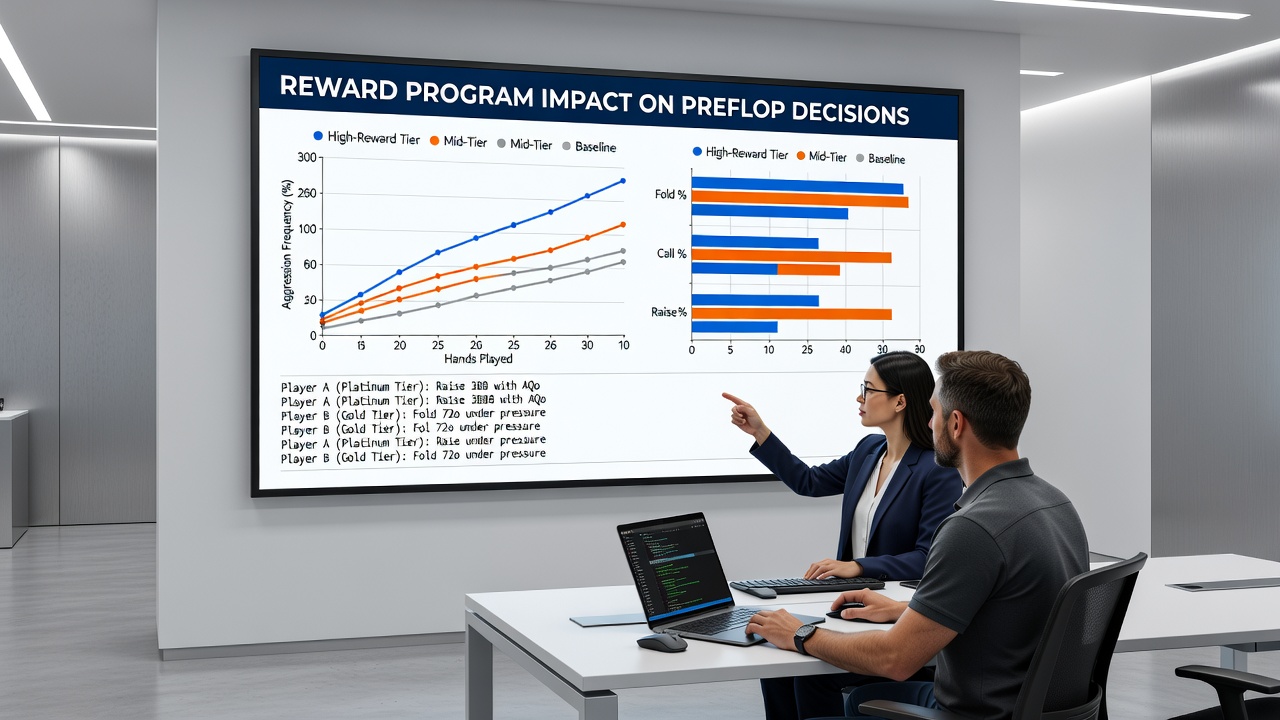
Reward programs typically award points based on rake contribution or time spent at tables, while some operators add multipliers during promotional windows or bonus thresholds tied to monthly volume. These point systems convert into cashback percentages, tournament tickets, or status perks that unlock additional benefits, and frequent participants adjust their preflop strategies to optimize point accumulation rates. Data collected by the New Jersey Division of Gaming Enforcement shows that players in mid-tier programs raise from late position 12 to 18 percent more often during periods when point multipliers activate, compared with standard play windows.
Preflop adjustments linked to volume incentives
Volume-based rewards encourage participants to enter more pots preflop because additional hands directly increase point totals regardless of outcome, and researchers tracking online ring games in regulated markets have recorded wider calling ranges in early position when cashback rates exceed 25 percent. In contrast, win-based components that reward net profit rather than activity push some regulars toward tighter opening ranges and selective three-betting to preserve bankroll while still climbing tiers. A September 2026 report from the Pennsylvania Gaming Control Board highlighted that players with access to tiered cashback exhibited a 9 percent increase in limp-fold frequencies from the cutoff when daily point targets neared completion, suggesting protective play near reward thresholds.
Multi-state operators integrate loyalty tracking across poker and other casino products, which further influences decisions because points earned at tables contribute to overall resort status. Those who study player databases note that participants balancing poker volume with slot or table game activity sometimes tighten preflop aggression to maintain session length, thereby maximizing combined point earnings across verticals.
Regional variations across licensed jurisdictions
Each state imposes distinct rules on reward transparency and point valuation, which produces observable differences in decision patterns. Michigan platforms, for instance, must publish clear conversion rates between points and cashback, and this clarity correlates with steadier preflop raise sizes among frequent users compared with states that allow variable multiplier events. Observers tracking HUD data across borders report that players migrating between New Jersey and Pennsylvania rooms adapt their opening ranges within two to three sessions to match the dominant reward mechanics of the new jurisdiction.
Industry reports from the American Gaming Association indicate that reward structures emphasizing long-term status over immediate cashback produce fewer extreme preflop deviations, while short-cycle promotions tied to specific weeks generate sharper spikes in voluntary put-ins. These patterns hold across thousands of tracked hands per month in each market.
Interaction between promotions and opponent modeling
Frequent participants incorporate assumptions about reward-driven behavior when constructing ranges against regulars, and database analysis shows increased cold four-bet frequencies when facing opponents known to chase point thresholds. Software tools that overlay loyalty tier estimates onto HUD statistics help players identify spots where opponents over-defend preflop to meet volume goals, and this information feeds back into adjusted three-bet sizing. Studies of ring game data from regulated platforms demonstrate that such meta-adjustments stabilize win rates even as individual decision patterns fluctuate with reward cycles.
Platform operators release periodic summaries of player activity that allow third-party analysts to correlate reward events with aggregate statistics, and these releases have become more detailed following updates to state reporting requirements in 2025 and 2026. The resulting datasets reveal consistent directional shifts without exposing individual accounts.
Conclusion
Reward program structures in state-licensed digital card rooms generate measurable changes in preflop decision patterns through volume incentives, tier thresholds, and cross-product point systems. Regulatory filings and aggregated platform data continue to document these effects across New Jersey, Pennsylvania, and Michigan, while regional rule differences produce distinct adaptation speeds among frequent participants. Ongoing collection of session statistics supports further examination of how these mechanics interact with standard game theory strategies.