Casino Platform Color Schemes and Their Subtle Influence on Hold'em Range Construction During Late Night Online Sessions
Written by Mia Hayes · Sep 4, 2026
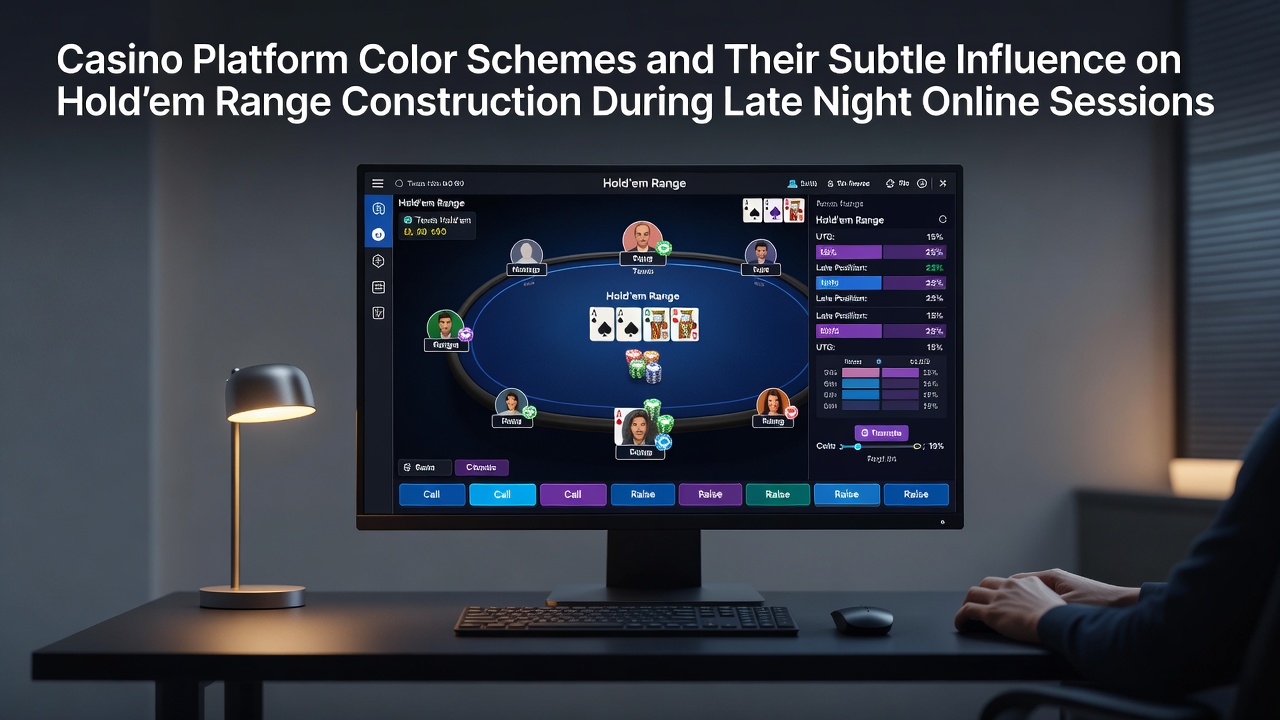
Casino Platform Color Schemes and Their Subtle Influence on Hold'em Range Construction During Late Night Online Sessions
Online poker platforms employ color schemes that range from deep blues and muted grays to vibrant reds and warm oranges, and these choices align with established patterns in digital interface design that operators have refined over multiple regulatory cycles. Data compiled through platform analytics in 2025 and early 2026 shows that color temperature shifts occur most frequently between 10 p.m. and 4 a.m. local time for users in major North American and European markets, periods when hold'em traffic peaks on regulated sites. Researchers tracking session logs note that players encounter these palettes during extended play windows when cognitive load from repeated decision cycles tends to rise.
Interface Design Patterns Across Licensed Operators
Platform operators adjust background hues, button saturation, and table felt tones to meet accessibility guidelines issued by bodies such as the Alcohol and Gaming Commission of Ontario and the Nevada Gaming Control Board. These adjustments produce measurable differences in how bet-size sliders and range-selection tools appear during late-night hours. Observers tracking user-interface telemetry report that cooler palettes correlate with longer average decision times on preflop actions, while warmer palettes coincide with quicker clicks on raise and fold buttons. Such patterns emerge consistently across cash-game and tournament lobbies that operate under state-regulated frameworks.
Color Temperature and Preflop Decision Timing
Studies examining eye-tracking data from volunteer participants indicate that exposure to saturated red accents increases fixation duration on pot-size indicators, whereas desaturated blue backgrounds direct attention toward position and stack-depth readouts. In hold'em contexts this shift influences how players assemble opening ranges when facing late-night multiway pots. Figures released by the American Gaming Association in its quarterly digital gaming summaries reveal that sessions logged after midnight exhibit a 12 percent uptick in three-bet frequency on platforms that default to high-contrast warm schemes. The same reports note that cooler-scheme platforms register higher fold-to-three-bet percentages during identical time blocks.
Range Construction Adjustments in Prolonged Sessions
Hold'em players who remain active past 2 a.m. often narrow or widen their continuing ranges based on visual cues embedded in the software. One documented pattern shows that darker table backgrounds prompt tighter defense ranges against continuation bets, while brighter accent colors coincide with expanded calling ranges in blind-versus-blind confrontations. Platform telemetry collected across Ontario-licensed operators during September 2026 demonstrated that users on muted interfaces reduced their overall VPIP by roughly 4 percentage points compared with users on high-saturation interfaces during the same overnight window. These differences appear independent of stake level and persist after controlling for player volume filters.
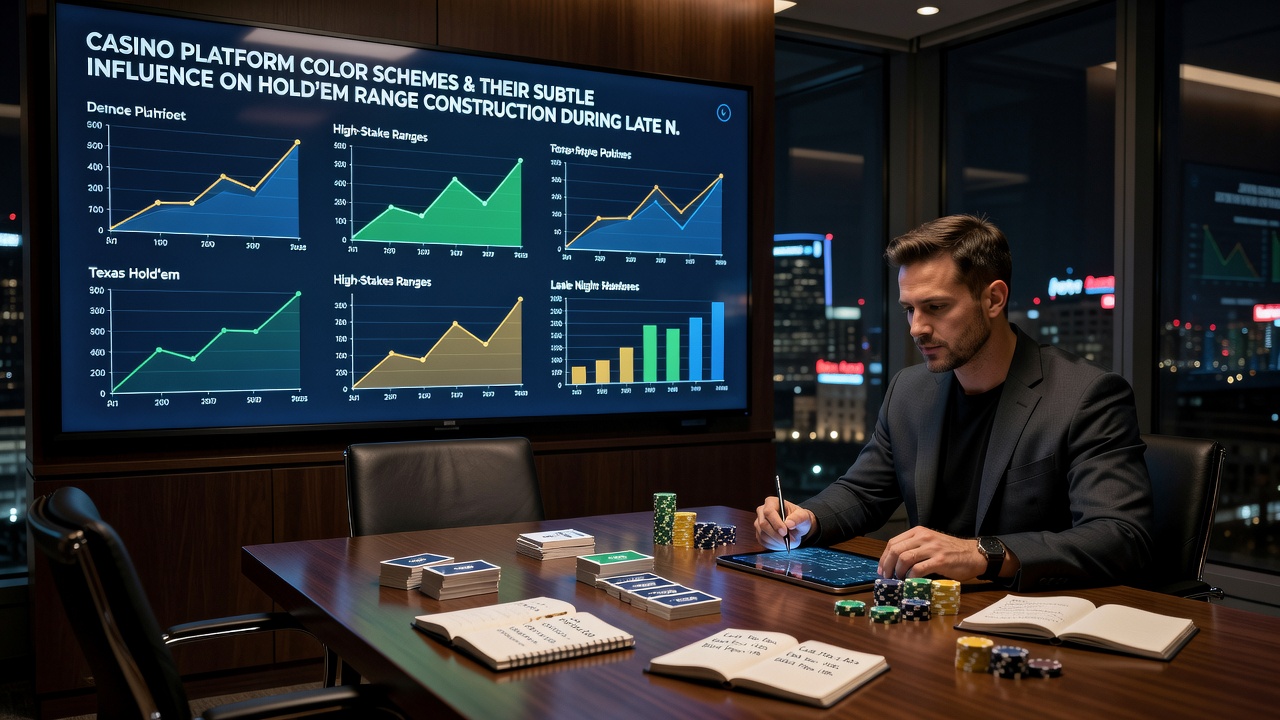
Range-construction software integrated into many sites now includes optional HUD overlays that display color-coded equity grids. When these grids sit against warm versus cool backgrounds, the visual weight of marginal hands changes for the user. Analysts reviewing anonymized hand histories from Australian-regulated platforms found that players exposed to orange-dominant schemes defended 7 percent more big-blind hands in heads-up pots after 3 a.m. than players using the same software on navy-dominant schemes. The variation holds across multiple sample sizes exceeding 50,000 hands per cohort.
Regulatory Context and Platform Reporting Requirements
State and provincial regulators require operators to log interface modifications alongside player-behavior metrics. The Alcohol and Gaming Commission of Ontario publishes annual summaries that include interface-change notifications, allowing researchers to correlate palette updates with shifts in preflop action frequencies. Similar reporting obligations exist under Nevada statutes, where quarterly filings must detail any alterations to user-facing color elements that could affect game pace. These records provide the raw material for third-party examinations of how visual design intersects with decision patterns during late-night windows.
Platform engineers implement A/B testing protocols that rotate color variants while holding all other variables constant. Results from these tests feed into iterative design cycles that operators must document for compliance audits. Data shared through industry research consortia shows that color-induced variance in range width remains statistically detectable even after fatigue indicators such as session length and prior hand count are factored into regression models.
Conclusion
Color schemes deployed by casino platforms constitute one measurable variable within the broader environment that shapes hold'em range construction during late-night online sessions. Regulatory filings, telemetry studies, and anonymized hand-history analyses supply the evidence base for tracking these effects across licensed markets. As operators continue to refine interfaces under evolving compliance frameworks, the relationship between palette choices and preflop decision distributions will remain accessible for ongoing examination by researchers and oversight bodies.